Saturday, 4 of September of 2010

Truffle Hunting

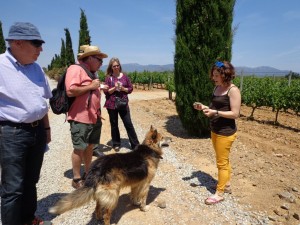
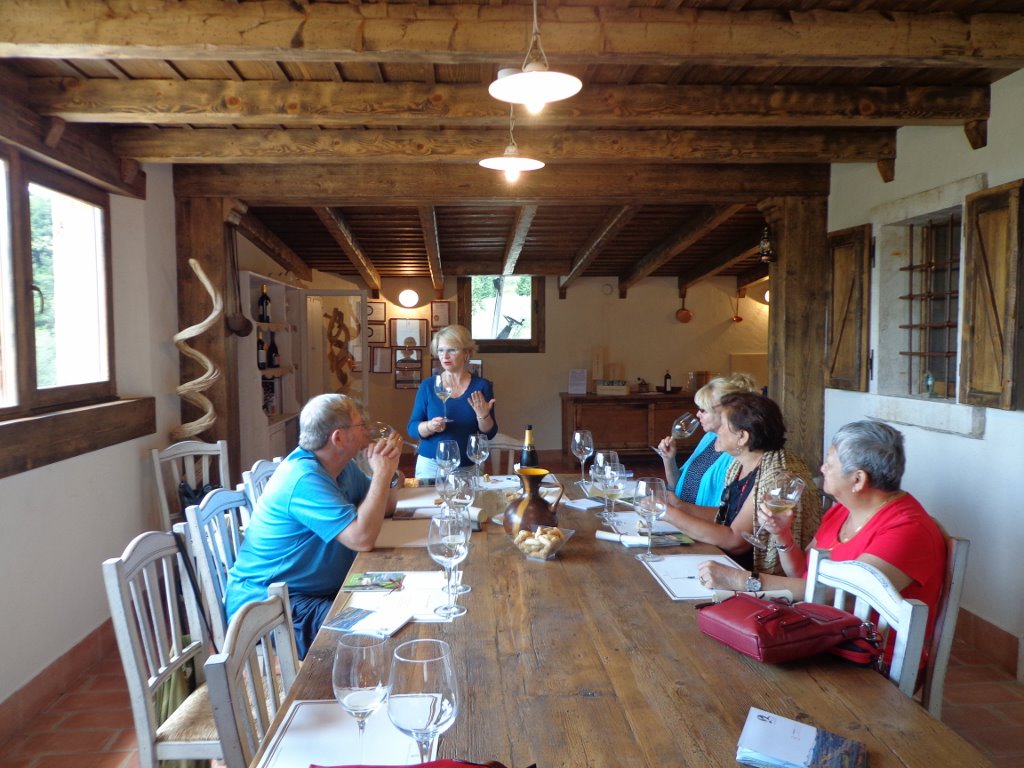
Last November, while taking a break from beer (yes, it is possible to take a break from beer), we had the pleasure of going truffle hunting with  Luigi Castino of Castino Luigi winery. It was a great afternoon (followed by some tasting in his cantina (aka cellar, aka storage area – but more on all of that later).  Luigi has a specific plot of land he owns, where truffles magically appear (because really, other than the truffle fairy who knows why/how these things really grow).  He took us along with a neighbor and his trusty, truffle hunting dog into the woods (and up some steep hills), to see what we could find.  And boy did we!  I’ve clipped together a bit of video from the experience.  Hope you enjoy.

Leave a comment

Daring Pairings

I have been selling cookbooks and wine books for over two decades.  There are many, MANY great wine books out there and of course, a gazillion good cookbooks.  You might call me a little jaded – and to be honest, I often don’t peruse my samples too intently.  Once in a while though, a book comes along that gets my attention to the point that I cannot put it down.

One such book just landed on my doorstep a few weeks ago.  Daring Pairings is the second book by Master Sommelier Evan Goldstein.  His first book, Perfect Pairings is definitely one of those standards that every wine geek (and many food geeks) have on their bookshelf.   Daring Pairings is one of those books that I will be referring to constantly, most likely for the rest of my life.  It is just a great read, and a great reference for many lesser-known varietals, and what to eat (and not eat) with them.  The varietals range from the more widely-known (Gruner Veltliner, Petite Sirah) to fairly obscure (Assyrtiko, Touriga Nacional.)  There is no Cabernet Sauvignon or Chardonnay in Daring Pairings.

dairing_pairings

The book is organized by grape varietal and offers well-written information on the history and growing locations of each varietal, with alternative names, styles of wine that the grapes are made into, what the particular varietal is blended with,  the “flavor lexicon” of each, and what other varietals it could be compared to.  Evan Goldstein sums each varietal up in a few pages – but after reading, you may think you have taken a three hour course on each.  He then goes on to explain what foods (and cheeses) go well with each varietal, and which don’t.  The book is easy to read, addicting even: Evan Goldstein has a way of writing that makes it all seem very easy, and it is clear he is very comfortable with his subject.

A recipe by a well-known chef is at the end of every entry – one that is perfect, of course, with the varietal being described.
Since Kim and I are going to be leading wine and food tours to the northwest  Spain, I was very happy to see a chapter on Mencia, the red grape of Galicia, in addition to the more well-known white Albarino grape from the same region.  More and more Mencia wines from Ribeira Sacra are becoming available here in the U.S. every day but a more widely available Mencia comes from the region of Bierzo.  According to Evan Goldstein, Mencia is a great food wine (and I couldn’t agree more.)  Lots of acidity, moderate alcohol, and low tannins make these wines good with roasted and braised meats, vegetable dishes, and marinades and sauces including herbs.  Interestingly, Goldstein doesn’t think pizza is good with Mencia, but I do; then again, I pretty much love pizza with anything.
Good cheese pairings include chevre, brie, gouda, and mimolette; also the local tetilla, among others.

Amy Cleary from UC Press, the publisher of Daring Pairings, kindly gave me permission to reproduce the accompanying recipe for Mencia from the book.

Seared Tuna with Braised Cabbage and Roasted Mushrooms

Chef Douglas Keane, Cyrus and Healdsburg Bar and Grill in Healdsburg, CA

SPICE MIX

2 t. black peppercorns

2 t. fennel seeds

1 t. brown mustard seeds

1 t. juniper berries

1 t. caraway seeds

3 allspice berries

3 bay leaves

1 head red cabbage, about 1 ½ pounds, cored, halved and thinly sliced

Salt and freshly ground pepper

1 t. sugar

2 T. unsalted butter

½ c. finely diced bacon (about ¼ pound)

2 shallots, finely minced

1 clove garlic, finely minced

¼ c.peeled, finely minced green apple

1 c. Mencia (Ribeira Sacra, Bierzo)

½ c. red wine vinegar

1 T. unsalted butter

¾ lb. cremini mushrooms, trimmed and quartered (about 2 cups)

2 t. canola oil

2 pounds ahi tuna fillets, trimmed of any blood lines and sinew

To make the spice mix: in a small dry skillet, combine the peppercorns, fennel seeds, mustard seeds, juniper berries, caraway seeds, allspice, and bay leaves over low heat and toast, shaking the pan occasionally, until fragrant (3 to 5 minutes.)  Pour onto a plate and let cool, then grind in a spice grinder to a fine powder.  Measure out 1 tablespoon for seasoning the cabbage.  Transfer the remainder to an airtight container and store in a cool cupboard for up to other several weeks for use in other recipes.

(I suppose you could also cut this in half, if you don’t think you will use it too often – S.E.)

Preheat the oven to 350 F. In a large bowl, toss together the cabbage, 1 T. salt, and the sugar, mixing well.  Set aside.

In a large sauté pan or Dutch oven, melt 1 T. of the butter over low heat.  Add the bacon and cook, stirring, until it renders some of its fat, about 3 minutes.  Add the shallots, garlic, and apple and cook, stirring occasionally, until the shallots and apple are soft, about 5 minutes.  Add the 1 T. spice mix, stir well, and cook until fragrant, 2 to 3 minutes.  In batches, lift the cabbage with your hands, squeeze to remove any excess moisture, and add to the pan.  Stir in the wine and vinegar, mixing well.

Cover the pan, transfer to the oven, and braise until the cabbage is soft to the bite and all the excess liquid is evaporated, about 1 hour.

About 10 minutes before the cabbage is ready, in a sauté pan, melt the remaining 1 T. butter over medium high heat and heat till lightly browned, about 30 seconds.  Add the mushrooms, season with salt and pepper, and place in the oven until the mushrooms are tender, about 5 minutes.

When the cabbage is ready, transfer to a warmed serving dish large enough to accommodate the fish, and placed the cooked mushrooms on top.  Cover to keep warm while you cook the fish.

Just before serving, in a large, heavy skillet, heat the canola oil over high heat until very hot.  Season the tuna on both sides with salt and pepper, add to the hot pan, and cook, turning once, until seared on both sides and still rare in the center, 1 to 2 minutes on each side.  Transfer to a cutting board and cut into slices across the grain.

Arrange the tuna slices on top of the cabbage and mushrooms and serve at once.

Note: The cabbage can be cooked up to several hours in advance and reheated in a 350 F oven for about 15 minutes before serving.

Daring Pairings is available in bookstores, and of course, from amazon.com.


Leave a comment

Cita Biunda

Cita BiundaCita Biunda is not your average brew pub.  At least not the restaurant in which we ate, let’s get that right out of the way.  They serve some serious gourmet food to go along with some seriously good beer.

But let me back track a bit.

Cita Biunda is located in Neive in Piedmont is under the control of Marco Marengo, brew master.  Marco got his start as a home brewer, then followed that up with some time at Guinness, the oldest brewery in Belgium (sorry the name escapes me) and the leader in the craft brew movement in Italy, Baladin (brainchild of Teo Musso).  About three years ago he ventured on his own and that’s how we arrive at Cita Biunda.

Restaurant at Cita Biunda

Restaurant at Cita Biunda

Not a huge operation, our tour consisted of standing in a single room that smells of a cross between a brewery, a bakery and a slice of heaven. This room occupies the middle floor of the building that houses the entire operation.  The bottom floor contains the “pub”, which we didn’t see (so maybe that is your typical brew pub) but a light, airy, colorful restaurant occupies the top floor and that’s where we sat to enjoy a killer lunch and some killer beer (the restaurant and the pub have two separate kitchens accompanied by two separate menus).

Like most of the other breweries we visited, Cita Biunda produces their beer using hops grown in other areas of the world (here mostly from the US and UK).  However, they are one of the few starting to work to produce their own, Italian hops.  They currently produce about 15 thousand bottles a year, and hope to start exporting to the US sometime during 2010 (but of course you could come with us and get a sneak peak).

Like Grado Platto, the restaurant at Cita Biunda (only opened for a few months), not only serves their beer, they cook with it too. Not only that, they keep the menu fresh, and seasonal by changing it every two months or so.  You have a choice though, you can order the “traditional” menu for €28 or you can order the “tasting of beer” for €30.  Lastly, they have a great soundtrack to go along with the meal, as while we were there, we heard Talking Heads, Beatles and Interpol coming out of their old turntable (albums line one part of the wall).

For our tasting, we start with Bianca Nieve, a light (not low cal, light in body) beer of 4.8% alcohol, with a floral, hoppy aroma.  They recommend this as an apperitivo to start the meal, and we enjoy it with a bit of cheese and salami (thought I was going to turn into a salami by the end of that trip but oh, so good). It has a light head and medium body, and I’m thinking good beer to have at the Jersey shore during the summer.

Next up, we had the Senuale Birra d’Abbazia Ambrata at a whopping 7% alcohol this is definitely one to enjoy with food and we had it with our primi and secondi.  This beer has tons of character, though light in color for an “ambrata” (aka amber), it’s really almost orange (think pumpkin ale in looks).  It has a thick head that took a few minutes to dissipate and flavors of caramel, licorice, grapefruit and something bitter (perhaps the hops).

Sorry, I need to take a moment as my mouth is watering remembering this beer.

Ah, let me take a moment to tell you about some of the dishes we enjoyed during this meal.  I can’t remember who ordered what but I do remember it was all good.

There was a baccala alla “Mary” which was tasty, made with their “Mary” beer it’s served with tomatoes and olives.  And a Vitello Tritato e tonnato which was two types of veal, one chopped and raw and the other sliced, cooked with a tonatto sauce underneath.  I believe we shared the two primi.

Tajarin al ragout di Salsiccia di Bra

Tajarin al ragout di Salsiccia di Bra

For secondi, we had Tajarin al ragout di Salsiccia di Bra (pasta with a sauce including sausage that was made from veal not pork), a risotto ai porcini con mousse with “Sensu Ale” – that means the mousse was made with their Sensu Ale and a gorgonzola dolce, very rich, very good and also a Petto d’antatra all’arancia e “bianco Neive” laccato al miele con verdure di stagione (duck made with the first beer we had tried and vegetables of the season). We ate as if it was our last meal.

Cita Biunda's Black Rebel

Cita Biunda's Black Rebel

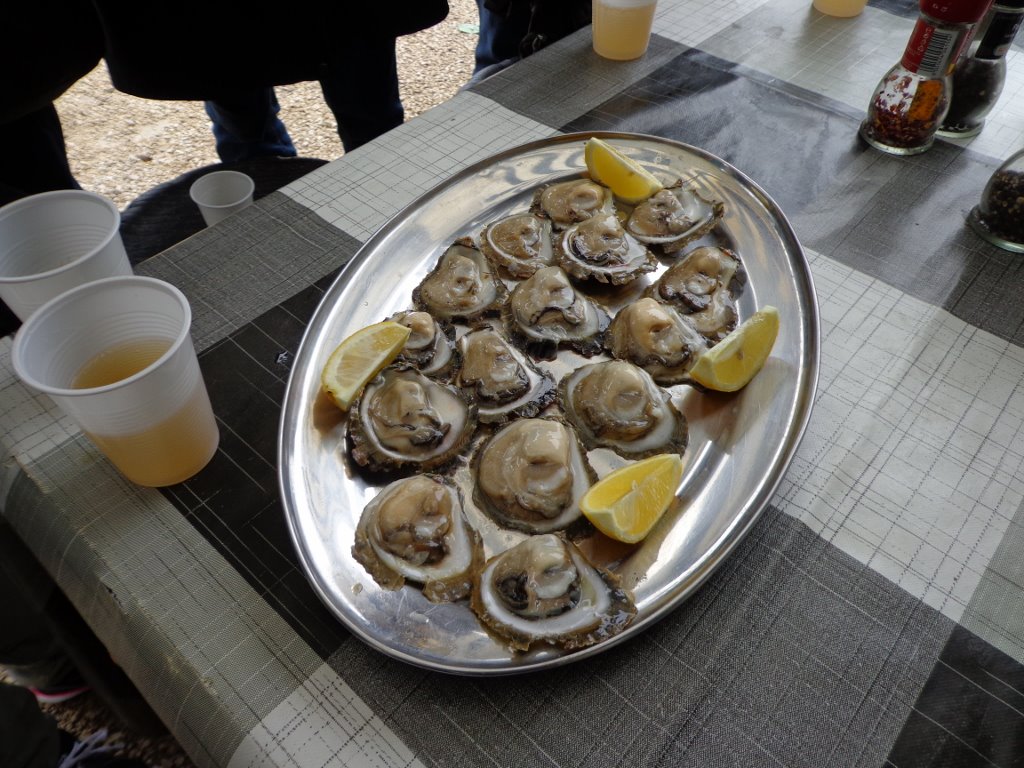
There were desserts too but we shared a sformatino fondate con spuma “Black Rebel” – the black rebel refers to their stout.  And this is no ordinary stout as we tried that too at the end of our meal, this was a mint stout – think Girl Scout thin mint cookies.  It has 4% alcohol with a thick head that dissipates quickly, smells like chocolate and could be dessert alone.  Yet, Lucca, the brilliant chef behind all of these dishes, serves this stout with oysters.  He swears “the freshness of the mint cuts the greasiness of the oysters.” As oysters are one of the few foods I have yet to try, I’m just going to have to trust him on this one.

Honestly, even if you don’t like beer, this is definitely a place to dine while you’re in Piedmont.


1 comment

Birrificio Lambrate

Birrificio Lambrate

Birrificio Lambrate

Ah, trying to recreate some of the great experiences we had on our Piedmont tour in November. See that’s what happens when you come home from a trip sick, you put stuff like this on the backburner until your memory grows fuzzy but this is the fun stuff so you (or really I) shouldn’t forget.

Luckily, though I find it hard to forget the people at Birrificio Lambrate and Birrifico Montegiocco. I’m going to start with Lambrate and work my way backward.

Birrificio Lambrate, located in Milan (so yes, not Piedmont but Lombardy), started as a tiny operation in 1996 with three owners Fabio, Davide and Giampaolo. Back then, they located the brewery in what today is their pub, and if you saw the pub, you’d understand what a feat that is. They started production with 50 litre batches and two to three kinds of beers. In April 1997, they opened the brewery to the public with their 150 litre production. In 1998, the pub opened three to four days a week and they moved to a 500 litre brew house. And they’ve been growing since (basically expanding into the ground floor spaces of buildings behind the brewpub, surrounding a common courtyard – they had just finished creating a bottling area in another new section when we visited). In 2008 they were producing 2000 litres per batch and made over 235,000 liters of beer in total.

While, in the past, most of the beer was sold in the pub alone or put into kegs and sold to other pubs in Milano (aka Milan) and Italy, they are now bottling and have expanded ownership to five, producing 13 types of beer (but not all at any single time).

My impressions of Lambrate … this is not only a place I would like to hang out, it’s a place I would like to work. It feels like a large, rollicking, extended family (perhaps because there are family relationships among the owners. Everyone was incredibly friendly and smiling and laughing occurs naturally, yet there was a professionalism and dedicated purpose you don’t necessarily see in large operations. My two regrets with regard to Lambrate? They’re not located closer to where I live and they don’t export to the United States. So if you want the beer, you’re going to have to come with us.

On the brew pub, as I indicated earlier, it’s small. I don’t recall how many tables, maybe a dozen and a bar, so it fills up quickly, especially it seemed at lunch on a Friday afternoon. We sat with one of the owners, Alessandra (aka Ale) as the brew master brought us beer after to beer to try while we enjoyed a delicious lunch started by an assorted meat and cheese antipasti (which would have sufficed) followed by some incredible pasta. As we drank, ate and talked, Ale exuberantly told us the history of the operation as well as described the beers, sometimes taking my notepad and pen so she could make sure I had the names and spelling correctly.

During the meal we started with their Montestello, like a pilsner made with Slovenia hops (they get hops from Germany, the US and some from Slovenia and England), it came in about 5% alcohol. While drinking this beer it clicked that chiarra means light, and that’s a description of this beer but please remember, light doesn’t mean low calorie, or flavorless, not here.

Another beer we enjoyed was the Sant ‘Ambroeus, named for the patron saint of Milan (aka Ambrose). This beer has double malt and comes in at 6.7% alcohol.

Next came the Ortiga Golden Ale at 5% alcohol, this one was very bitter and flavorful, which surprised me for this lighter ale, without a lot of hoppiness.

Last up was the Ligere, an APA (American Pale Ale) at 5% alcohol this very hoppy beer smelled a bit like marijuana according to Shannon; they make it with the hole hops, flower and all.

One of the beers I was hoping to try was a seasonal, Christmas beer, the Brighella but unfortunately that wouldn’t debut until December 8th to coincide with the feast of Milan’s aforementioned patron saint.

We had a great afternoon touring Birrificio Lambrate, meeting the owners, sharing a meal and of course tasting their beer. I can’t wait to return!


Leave a comment

Eataly – Monday

So, according to Eataly’s website (on the location page), they’re closed on Mondays.  But on the main page, it says they are open. It was that bit of misinformation that led us to visit Eataly on Sunday (when it was totally crowded) as opposed to Monday.  But since Torino is like many non-touristy Italian cities, many things (museums, stores, etc.) are closed on Monday (at least until late afternoon), so on Monday, we decided to chance that the main page was correct, and headed back to Eataly, catching the #1 bus at Porto Nuovo (and yes, we bought tickets, €1 each, and stamped them).

And yes it was open.

Eataly or Paradise, whichever you prefer

Eataly or Paradise, whichever you prefer

Our plan was to have lunch in the beer section, which is a huge round bar that was too crowded to enjoy on Sunday.

Did I mention the beer section by the way? It’s huge, containing not only Italian artisanal beers, but beers from the UK, Belgium, Germany and the US.

Eataly's Beer Selection - but only a part of it

Eataly's Beer Selection - but only a part of it

We sat at the counter, and after a bit of discussion, decided on the “plate of the day” as the other four items on the menu (cheese and sausage plates, a hamburger, chili con carne – yes you read that correctly – and a wurtzel didn’t appeal).  Today’s plate contained chicken rollatini (stuffed with ham/prosciutto and wrapped in a bacon), roasted potatoes and a salad.

Lunch special at Eataly

Lunch special at Eataly

With it, we opted for two draft beers, though you can order of their beers by the bottle at a nominal charge.  Shannon enjoyed Baladin’s Nora beer, which has some nice hops on the smell, is deep golden in color, a head that dissipates quickly and smells and tastes a bit of apricot and peach with slight carbonation. She really enjoys this beer.

Baladin's Nora Beer

Baladin's Nora Beer

I opted for the Forst Sixtus, though not a microbrewery, it was something different (a dopplebock) and interesting, a brown ale with a quick dissolving head and initial notes of caramel and chocolate, malty and also low on the carbonation.  This time of the year, it’s definitely the type of beer I enjoy.

Forst Sixtus Dopplebock

Forst Sixtus Dopplebock

While there, we had some fun with a mural of Teo Musso, the founder of Baladin.

Shannon and Teo Musso

Shannon and Teo Musso

And enjoyed perusing the incredible selection of beers.

More Beer at Eataly

More Beer at Eataly

But the best deal of the day may be the bottle of Sambuca for Chris and chocolate eggs I purchased at the supermarket by the bus stop.


1 comment

Bottling – Scots Brown Ale

Now, if you read the previous entry on brewing, we left off with the Wort in the fermenter, in the basement, bubbling a way, as little yeast monsters ate up the natural sugar and made your friend and mine, alcohol.

Well, two weeks went by and now we come to bottling time! We have to take all of that wort and get into our large-format (i.e., 22 ounces) bottles. While this isn’t as time consuming as the brewing (which takes about three hours from start to finish), it is a bit nerve-wracking because of all the sterilization that must take place (the key to brewing beer is the cleanliest of environment, and well, if you know me, you know how ironic that is).

Wort after two weeks

Wort after two weeks

So we started out by sterilizing everything (not like in home canning where you boil the jars but by using a no-rinse sterilization agent and dunking the bottles into it).

Empty, sterelized bottles (those lying down need to drain still)

Empty, sterelized bottles (those lying down need to drain still)

Next, put corn sugar in the bottom of the bottling bucket and siphoned the wort from the fermenting bucket to the bottling bucket. You want to do this with as little air exposure as possible to keep the beer from growing bacteria and skunking. Do not stir the wort in the bottling bucket (the pouring of the beer into the bottling bucket should churn the sugar enough to incorporate it into the wort.

Chris siphoning beer from fermenter to bottler

Chris siphoning beer from fermenter to bottler

Siphoning beer into bottles

Siphoning beer into bottles

Capping

Capping

Once in the bottling bucket, you siphon the beer into the beer bottles and then put the cap on (this is the only part of the process where it really does help having two people working as a team).

That’s it – store the bottles for at least two weeks (to get the carbonation going) and then you can enjoy (though apparently the longer you let it sit, the better). From our five gallons we got 24 22-oz bottles of beer (you do the math).

Now the question I have is to label or not? I think labels would look cool but do they stay on and can we get them off, when we want to reuse these bottles in the future for another batch?

Bottled Beer

Bottled Beer


Leave a comment

Brewing – Scots Brown Ale

So visiting breweries and talking to brew masters made me realize to get a real understanding for the brewing process, I needed to step in and actually make some beer. Many of you have seen those home brew kits (e.g., Mr. Beer) but that felt to me, like learning to bake bread via a bread machine. Yeah you get a feeling for the ingredients involved but not much else.

Now before I continue, let me give you my cop out. While I did use a huge vat on the stove to brew the beer, and I did cool this quickly (but not in a cooler) and I did move it to a fermenting bucket with an airlock for two weeks and I did move the beer from the fermenting bucket to a bottling bucket and I did use a tube (via vacuum effect) to move the beer from the bottling bucket into the bottles, and I did cap them, I also “cheated.” (Oh, and feel free to comment on my cheating here). I used a “kit” that came with all the necessary ingredients to brew our beer, a Scots Brown Ale. Yes, I know there are recipes, and I can buy and grind my own grains and flavoring ingredients and even make up my own recipes, but isn’t that like trying to make a beef wellington from scratch for the first time, without a recipe and/or pre-made puff pastry – you might be able to do it but would you really want to eat the results?

So I got my kit from The Home Brewery and it worked well.

And yes, my trusty assistant (aw, hell, who we kidding here – I made him do most of the work), Chris was by my side through the process.

Chris by the Warming Pot

Chris by the Warming Pot


First step, we had to heat five gallons of water in a large pot (and let me stop here to give a shout out to my brother, Andy, who got us a big ‘ol turkey deep fryer which is now doubling as our brew pot). Trust me when I tell you it takes a while to heat five gallons of water (to 170 degrees). While the water heats, you’re letting a cheesecloth filled with the “specialty grain” steep in there.

Water with specialty grains

Water with specialty grains

Water after grains steeped

Water after grains steeped


Next up, we took the pot off the heat and added the dry malt extract and hop pellets (the hop gives it that bitterness) and we stirred and stirred until it dissolved.

Stirring the dry malt extra

Stirring the dry malt extra

Then you boil it and continue to boil it for an hour. During that time, you gotta shove the green gunk from the bitterhops back down into the liquid (otherwise your beer won’t have as much of that bitter flavor in it).

Gunk that gets pushed down (a bit gross, no?)

Gunk that gets pushed down (a bit gross, no?)

Before it finishes boiling (45 minutes into the boil basically), we added Irish Moss. This stuff keeps the beer from getting cloudy.

This is it as it boils away

This is it as it boils away

Fifty minutes into the boil, we added the flavoring hops (okay – not really clear on what flavor the “flavoring hops” and this is the point where if I had selected my own recipe or made one up, I might have some more control over the end product). Oh, let me also note, after talking to a local beer geek last weekend, I learned more about dry malt (even tasted some) and got a better feel for how they affect the end product too.

Two minutes before the end, you add Aromatic Hops – and again, I’m assuming for smell but again because this was a pre-made kit, I have to trust them as to the type of aroma we were adding and whether or not it would be appropriate to a Scots Brown Ale. You wait to add them until the end so the aromas don’t boil away (kind of like adding fresh herbs at the end of cooking).

Now the fun comes – you’ve got to get this hot mass down to 75 degrees as quick as you can (you don’t want bacteria getting into it). By the way, you call this hot mass the Wort and you can buy a “Wort Chiller” to cool the beer down quickly. But lucky for us, the day we brewed it was about 20 degrees outside so we loaded it into a bucket filled with ice (today, we’re brewing a wheat beer and there’s snow outside, so we’ll stick it in that to chill).

Cooling Wort

Cooling Wort

Once the wort cools, you dump all of it into a fermenting bucket. If you ended up with less than 5 gallons of Wort, you can add cooled, pre-boiled clear water to bring the volume back to that 5 gallon mark.

Last step for the “brewing process” is to add the yeast. Sprinkle it on top of the Wort, it will get damp and sink eventually. Close up the fermenting bucket and hook up the airlock (which you fill with water or vodka – though vodka works better as an anti-bacteria fighter) and set it someplace cool and dark to do its work (we put it in our basement).

Now those little yeast monsters will eat all the natural sugar in the wort (from the hops and malts and stuff, creating alcohol and gas (aka CO2). After a couple of days, you’ll actually see bubbles in the airlock.

We left ours for two weeks, fermenting away before we bottled but that will be another entry.


1 comment